How Steps are Changing Educational and Professional Pathways for Neurodiverse Communities
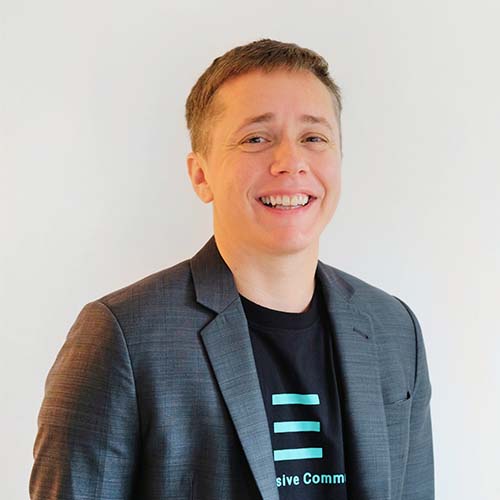
In this #MeetTheMB100 interview, Max Simpson, Founder & CEO of Steps, shares how the social enterprise is helping employers and educators to embed evidence-based practices that recognise neurodivergence as a natural asset rather than a default deficit.
Long Form Questions
Meaningful Business (MB): What are the challenges you are trying to solve, and why do they matter to you?
Max Simpson (MS): People with visible and invisible experiences of disability and neurodivergence have insights, perspectives, ways of communicating, and approaches to learning and working that enrich communities, making them more diverse, resilient, and creative. 15-20% of the global population is considered neurodivergent, but educational and professional systems aren’t always designed to be inclusive.
Our social enterprise, Steps, is improving neuro inclusion in formal education, employment, and leadership, and helping to create a world where neurodiversity is not just accepted but celebrated. We run vocational training programmes, social business cafes, an inclusion consultancy, and a research centre that offers real, actionable value to businesses committed to inclusive hiring practices.
As someone with first-hand experience of neurodivergence (both as a family member and as an educator), I often hear why educational and professional organisations can’t be more inclusive: “it’s too expensive”, “we don’t have proof it’s worth it”, or “it will negatively affect people who don’t need accessibility considerations.”
These responses show that society is missing a huge opportunity to build communities and workplaces where people feel they belong and are therefore brave enough to contribute, which is also really, really good for business and innovation.
MB: How is your work tackling these challenges, and what impact are you having?
MS: At Steps, we balance direct intervention and systemic work across four core pillars: education, employment, advocacy, and research.
Education: Nine years ago, we established a training centre for neurodivergent youth, and we quickly recognised that mainstream schools simply do not offer suitable, personalised pathways for young learners. It also became evident that very few of the young people we work with received employment guidance; they were typically only advised on further education, so it was assumed that they would be staying at home forever. So we started running social enterprise businesses, like coffee shops and a business service centre, where our trainees could do work simulations and progress through various work experiences, ultimately leading to paid internships or employment. Our job coaches could also support them in transitioning to employment outside.
Employment: As we began engaging with companies for off-site roles, we discovered that business leaders were interested in becoming more inclusive, recognising that diversification is vital for long-term success and building a strong organisational culture. We started offering our consultancy services to organisations, helping them implement specific change management initiatives to enhance inclusion.
Research: Soon after, we established a research centre in partnership with Chulalongkorn University’s Sasin School of Management to ensure that the tools, assessments, and recommendations we shared were grounded in best practices and appropriately localised for Southeast Asia.
Advocacy: Although we’re just beginning to expand our advocacy efforts, engaging with the ILO’s Global Business and Disability Network and the International Disability Alliance, we’re excited to demonstrate the potential of peer-to-peer learning and cross-sector collaboration beyond Southeast Asia.
MB: How do you work with partners in the broader ecosystem to achieve your mission?
MS: We always want to model what inclusive practice looks like. Whether we are working with educational and employment clients, research partners, or policy collaborators, we are open and honest, recognising that there is no single way to become more neuro-inclusive or disability inclusive. You simply have to begin. Honesty and transparency enable us to tailor the scope of our projects to create meaningful, measurable impact.
MB: What is your ambition for the future of your business, and what support do you need to increase your impact?
MS: At Steps, our goal is to help facilitate regional and global solutions that support neuro inclusion and disability inclusion. Starting in Southeast Asia (where we are based), we aim to achieve this by creating data-informed baselines for neuro inclusion and disability inclusion, refining and integrating proven tools into mainstream practice, and establishing an open-source hub of resources to counter society’s inherent human and technological biases. Ultimately, we want to build a world where we aren’t needed – because the way our brain or body works is recognised as a default asset rather than a default deficit.
To increase our impact, we need support to develop and refine the tools until they can be shared as part of a fully established open-source hub. We need partners who value human creativity, diversity, and AI, and who are dedicated to building physical and digital worlds which bring out the best in everyone.
Quickfire Questions
MB: Can you share a mistake that you’ve learned from?
MS: When we started our consultancy, we were more rigid about our services, and our target market was quite limited because we were trying to manage considerable risks around inclusion and perceptions.
Now, we have improved our partner assessments and expanded our services so we can meet people and organisations where they are.
MB: What is something you wish you were better at?
MS: Sleeping? Is that an acceptable answer? Really, though, running an M-shaped business is a lot of work, and we all contribute a lot.
We try to practice good work-life balance and habits, but things can be unpredictable when you’re innovating to change the status quo. Getting that balance of when to push forward and when to mitigate risk takes a lot of energy.
MB: What underrated skill do you wish more impact-focused leaders invested time in?
MS: Psychological safety is incredibly important to all of us at Steps, which means that we value and practice active listening. People need to be brave enough to communicate, and leaders need to be brave enough to really listen and keep things in perspective. That uncomfortable feeling is usually where growth starts.
MB: What is one book that everyone should read?
MS: ‘The Reason I Jump’ by Naoki Higashida is close to my heart. I’m a huge believer that stories build empathy, and empathy motivates people to change themselves and the systems they’re part of. This book is fantastic for anyone looking to build empathy for and broaden their perspective on neurodivergence.
MB: What are the podcasts you can’t imagine your day without?
MS: Like a lot of millennials, I spend a lot of time on Instagram. There’s so much inspiring content from neurodivergent and disabled creators. I also find LinkedIn to be a great place to connect with other DEI leaders. I have also just started reading ‘Tiny Rice Grains’ by Lyn R Lee, which offers an Asian perspective on DEI and the everyday actions that can create change.