


Building the world’s most sustainable denim to make clothing that is designed not to ‘die’

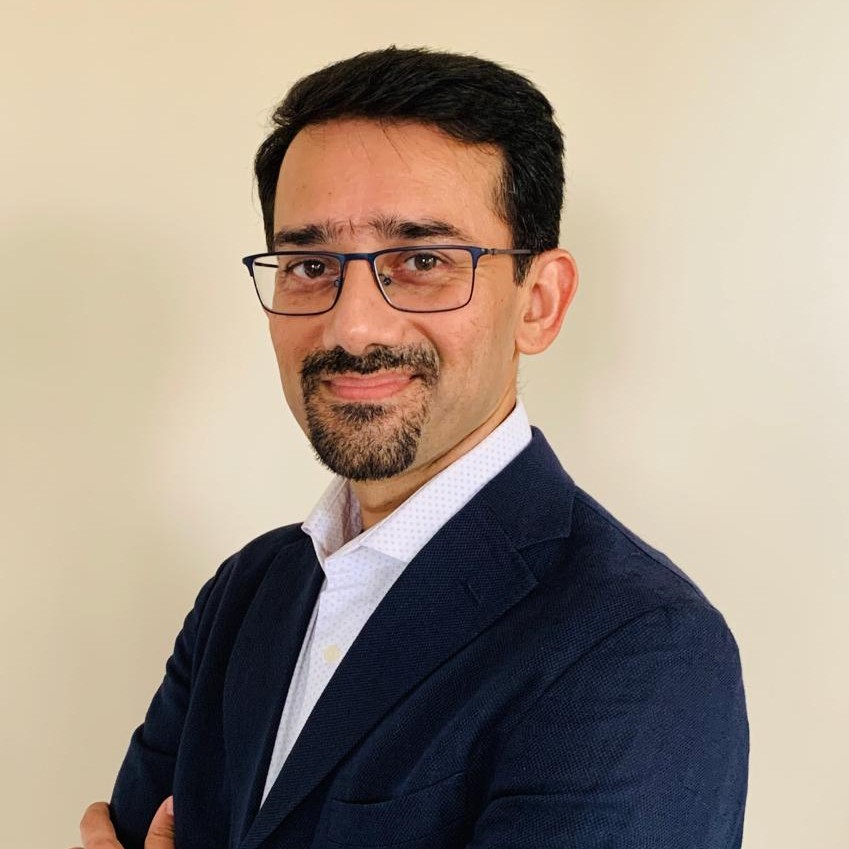
In this #MeetTheMB100 interview, Parvinder Singh, Founder & CEO of Aadi Sustainability Solutions, explains the challenges of the fashion industry’s linear model and the support needed to help make circularity a measurable operating system and mainstream default.
This interview series is sponsored by EY, Hogan Lovells, The Portman Estate and Forster Communications.

Long Form Questions
Meaningful Business (MB): What are the challenges you are trying to solve and who are the main beneficiaries?
Parvinder Singh (PS): Fashion is one of the most resource-intensive industries, yet it still operates on a largely linear model: extract, produce, sell, discard. This creates three intertwined challenges we are focused on solving. Firstly, the waste problem: textile waste that could be a resource ends up landfilled, burned, or exported as a burden. Secondly, the footprint problem: excessive use of water, energy, chemicals, and virgin materials across the value chain. Thirdly, the people’s problem: supply chains often treat workers as ‘cost centres’ rather than stakeholders, leading to weak inclusion, dignity, and growth pathways.
At Aadi Sustainability Solutions, we work from a simple philosophy: people, planet and progress. Every decision must address at least two, if not all three. The main beneficiaries are workers, especially women and skilled operators who deserve safer, better jobs; brands and consumers seeking credible low-impact products and ultimately communities and ecosystems impacted by pollution, resource depletion, and unmanaged waste.
MB: What is your solution and what impact have you made to date?
PS: Our solution is to make clothing that is designed not to ‘die’. We manufacture circular denim garments with zero material waste and a strong focus on eliminating waste and leakage across processes, so that the product can be circulated again through reuse, repair, and recycling.
Circularity for us is not a marketing label. It is a measurable operating system where material choices, efficiency, process controls, traceability, and end-of-life readiness are monitored and improved continuously. The goal is simple: produce denim with the lowest possible environmental footprint, while keeping the product recyclable and the workplace inclusive.
In the last five years, we have diverted more than 50,000 tons of textile waste from disposal and enabled its reintegration into productive use. We have achieved zero-waste facility status and built working systems that prove circular manufacturing can be practical and scalable. In this financial year, we are on track to produce over one million denims and divert more than 8,000 tons of textile waste through our operations.
MB: What has been the most complex or underestimated part of delivering this work?
PS: The most underestimated part has been changing mindsets while building measurement systems that are both credible and affordable. In fashion, waste and footprint are often spoken about in headlines, conferences and packaging but many stakeholders still have a superficial understanding of what truly drives impact at material, process, and end-of-life stages. When you propose circularity that is engineered into the product, you are not only asking for a new design approach, but also a new way of sourcing, planning, documenting, and communicating. That takes time, repetition, and trust-building, especially when decision-making is often led by marketing or sales priorities rather than product and sustainability realities.
The second complexity is impact reporting. Credible reporting requires structured data, consistent baselines, audits, and frameworks. For MSMEs and fast-moving supply chains, this can become repetitive, costly, and operationally heavy. Yet without it, genuinely better products get treated the same as greenwashed products. We have learned that impact must be built like infrastructure: clear definitions, standard operating systems, and simple dashboards that teams can use daily, not just once a year for a report. Making this both rigorous and scalable has been one of the hardest parts of the journey.
MB: What is the biggest threat to you right now and why?
PS: Our biggest threat is misalignment across the ecosystem, because circular manufacturing is not a ‘solo sport’. The industry has been dominated for decades by linear incentives: faster drops, cheaper materials, and marketing-led differentiation. In that system, product integrity and circular design often do not have enough power at the decision table. When sustainability becomes a slide instead of a spec, the supply chain is forced into compromises that break recyclability, traceability, or real footprint reduction.
We are operating in a new territory where impact becomes a competitive differentiator and must be proven, not claimed. That requires stakeholders to adopt new metrics, new documentation, and longer-term thinking. The risk is not that the solution doesn’t work, but that the system’s old habits slow down adoption: short-term price negotiations, inconsistent requirements, and weak accountability for end-of-life. Our response is to keep building proof, collections, and measurable outcomes that brands can confidently stand behind, and to align stakeholders through transparency, education, and practical pathways that make circularity easier to implement.
MB: What is your ambition for the future of your business, and what support do you need to increase your impact?
PS: Our ambition is to become the world’s most sustainable denim manufacturer, and to prove at scale that circularity can be cost-neutral, desirable, and commercially resilient. We want to show that denim can be made with minimal resource use, zero waste, and true end-of-life readiness, while creating dignified livelihoods and skill pathways for workers. In other words: ‘denims that don’t die’, supported by systems that ensure materials keep rotating instead of exiting the economy as waste.
To increase our impact, we need support in showcasing and validating impact: stronger storytelling backed by credible measurement, third-party verification, and simpler reporting frameworks that don’t punish MSMEs for doing the right thing. Secondly, we are looking for committed partner brands who are willing to co-create circular collections, align on material and design principles, and educate consumers with honesty. And lastly, growth capital is crucial to scale infrastructure, traceability, and circular operations faster.
Quickfire Questions
MB: Can you share a mistake that you’ve learned from?
PS: Early on, I approached problems mainly from my own perspective. I learned that leadership demands seeing through many lenses: workers, brands, recyclers, regulators, consumers. Better decisions come from choosing what strengthens the process, not the ego.
MB: What is something you wish you were better at?
PS: I wish I were better at simplifying impact communication without losing depth. Circularity has technical layers, and the real skill is translating that into language that motivates brands and consumers to act, not just to agree.
MB: What are you most proud of about your work?
PS: I’m most proud that our work creates tangible outcomes for both people and the planet while staying commercially viable. We have focused on diverting waste, building a zero-waste system, and reducing burden on the environment, whilst also creating awareness on sensible consumption.
MB: What is the one book that everyone should read?
PS: What Are You Doing With Your Life? by J. Krishnamurti. It forces self-inquiry and when people become clear about what they are and truly value, they make braver choices – that can change careers, businesses, and societies.
MB: What are the sites, blogs or podcasts that you can’t imagine your day without?
PS: LinkedIn, McKinsey, Naval Ravikant, Osho – together they balance strategy, action, and inner work for me.