

How Pale Blue Dot is supporting founders who are fundamentally rewiring the global economy

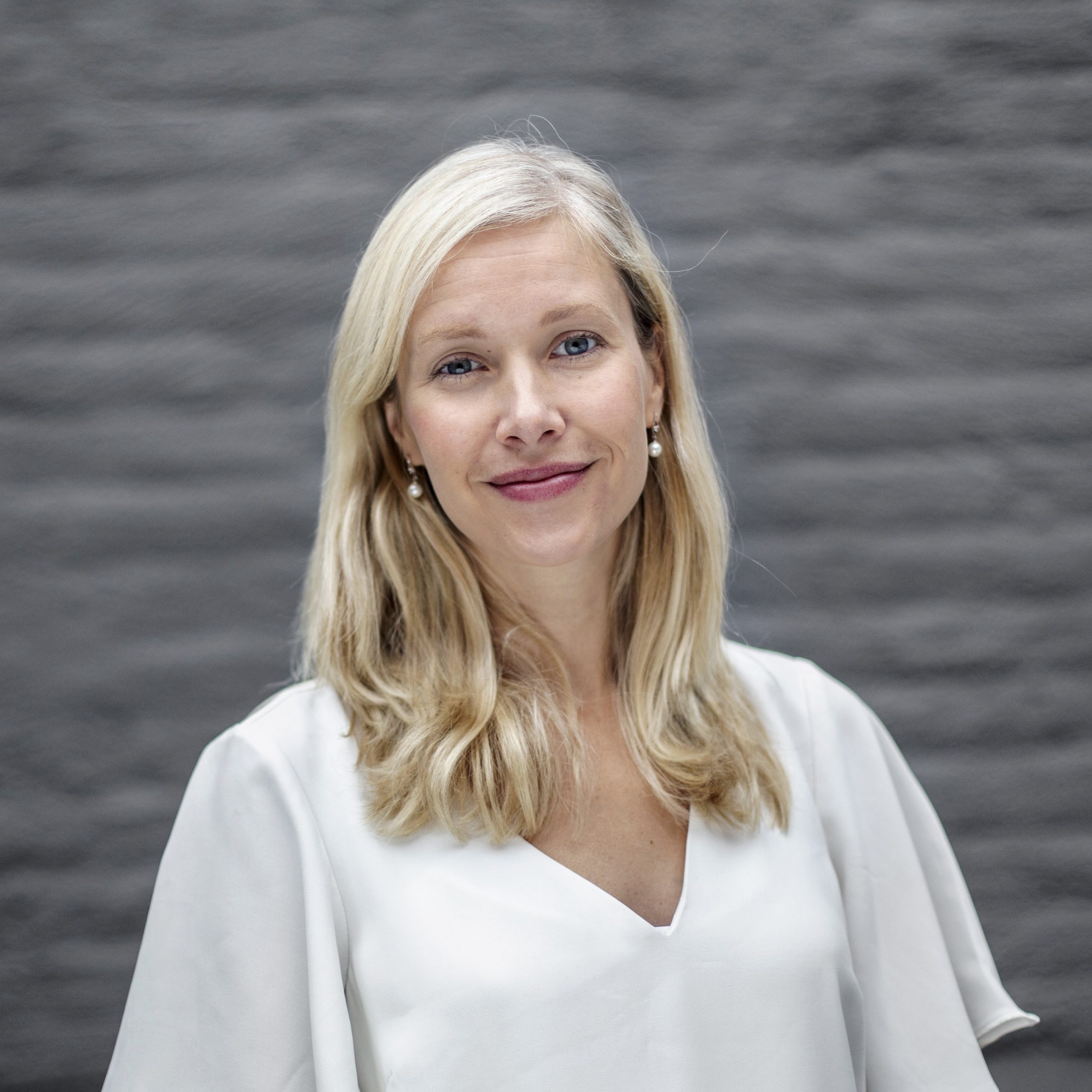
In this #MeetTheMB100 interview, Heidi Lindval, Co-founder and General Partner at Pale blue dot, explains why climate is one of the defining humanitarian crises of our generation, and shares how European sovereignty and grid resilience will become critical over the next decade.
This interview series is sponsored by EY, Hogan Lovells, The Portman Estate and Forster Communications.
Long Form Questions
Meaningful Business (MB): What are the challenges you are trying to solve and who are the main beneficiaries?
Heidi Lindvall (HL): Climate is the biggest current macroeconomic shift that will impact how we live, what we eat, and where our energy comes from. Every sector will be reshaped by it, which is why our focus spans both hardware and software solutions tackling these transitions.
This matters to me personally as I see climate as one of the defining humanitarian crises of our generation. The problems our founders are solving aren’t just commercial opportunities, they’re existential challenges for humanity. Being part of building and financing that future feels genuinely meaningful in a way that few other areas of investment can match.
I’m drawn to founders who recognise that the climate transition isn’t a niche vertical but a fundamental rewiring of the global economy. Whether it’s energy infrastructure, food systems, the built environment, or financial services, there’s an enormous amount of work to be done, and the companies that get this right will define the next several decades of progress.
MB: What is your solution and what impact have you made to date?
HL: Climate X is building software that quantifies climate risk and resiliency at a property level. Their technology allows banks, insurers, and real estate owners to understand exactly how individual assets will be affected by future climate events such as flooding, wildfires, and storms. This gives the financial system the data it needs to price risk properly and prevent enormous future losses.
Green Got is another example, building a green banking and investment platform. Most traditional banks quietly invest customer deposits into fossil fuels and other industries that customers have no visibility into or control over. Green Got flips that model, offering a transparent banking experience that channels money toward sustainable activities while still generating strong returns for users.
Both companies illustrate something important about climate investing: the most powerful solutions often sit at the intersection of finance and the real economy. By giving institutions and individuals better tools and better data, our portfolio is helping to shift trillions of dollars toward outcomes that actually serve our long-term future.
MB: What has been the most complex or underestimated part of delivering this work?
HL: The emotional side of the job is far heavier than I originally realised. You’re there for founders in the highs, but more importantly in the lows. When times are genuinely tough, standing by them takes real energy and presence. That sustained support, often over years, is something you can’t fully appreciate until you’re in it.
Picking is another deeply complex part. You’re effectively betting on a person’s trajectory with very limited information, trying to predict where someone will be in ten years based on a handful of conversations and early signals. On top of that, you carry the responsibility of deciding whether a founder and their idea deserve to be funded, and whether you want to see this person become one of our future leaders. There’s no formula for it, and humility about how often you’ll be wrong is essential.
MB: What is the biggest threat to you right now and why?
HL: European sovereignty is something I think about constantly. Which data, processes, supply chains, and products do we need to own as a continent in order to build resilient infrastructure and remain economically and politically self-determining? After years of assuming globalisation would only deepen, we’re now confronting how exposed we’ve become, and that creates enormous opportunity for founders building European alternatives.
Closely linked is grid resilience. Understanding how weather volatility and geopolitical risk shape our energy supply, trade routes, and procurement is becoming central to almost every industry. The companies building tools to model, harden, and adapt our critical infrastructure are going to be quietly essential over the next decade.
MB: What is your ambition for the future of your business, and what support do you need to increase your impact?
HL: My ambition is to prove that you can build a financially successful VC fund while being deeply conscious about what you invest in and who you choose to back. Too often in venture, the conversation is dominated by financial performance in isolation, as if returns exist independently of the world they’re created in.
I want to widen that conversation. Ultimately, no one benefits from investing in technology that makes humanity worse off or undermines our collective future, no matter how strong the returns look on paper. We need to be more open about this and consider what does success in VC actually look like. Building companies that secure our future food and energy supply, for example, is a no-brainer. But there are also plenty of companies making us more addicted to our screens and more polarised, and I don’t think that’s a useful direction for capital to flow.
In terms of support, we need to have these conversations more openly – with limited partners (LPs), other general partners (GPs) and investors and also with founders. This is our collective responsibility and we cannot ignore it any longer.
Quickfire Questions
MB: Can you share a mistake that you’ve learned from?
HL: I’ve invested in founders I wanted to succeed more than I genuinely believed they would. Sometimes the best people aren’t the best entrepreneurs, and learning to separate the want for them to succeed from investment judgement is something I’m always working on.
MB: What is something you wish you were better at?
HL: I wish I was better at writing and sharing my thoughts publicly. I have plenty of ideas I share readily in conversation, but I don’t enjoy writing and haven’t yet found a format that makes external sharing feel natural.
MB: What are you most proud of about your work?
HL: I always say that the journey matters as much as the destination. I am proud of how I am building our fund, how I treat our founders and how I try to conduct business in a more conscious, considered way.
MB: What is the one book that everyone should read?
HL: The Hard Thing About Hard Things by Ben Horowitz. I haven’t re-read it recently so I’m unsure how it’s aged, but it had a profound impact on how I lead and navigate genuinely difficult situations.
MB: What are the sites, blogs or podcasts that you can’t imagine your day without?
HL: I’m a tourist with content, preferring variety over loyalty to any single source. I love when people suggest a blog or a podcast but listening or reading one thing religiously rarely does it for me.