

Creating a human-centric approach to digital waste management

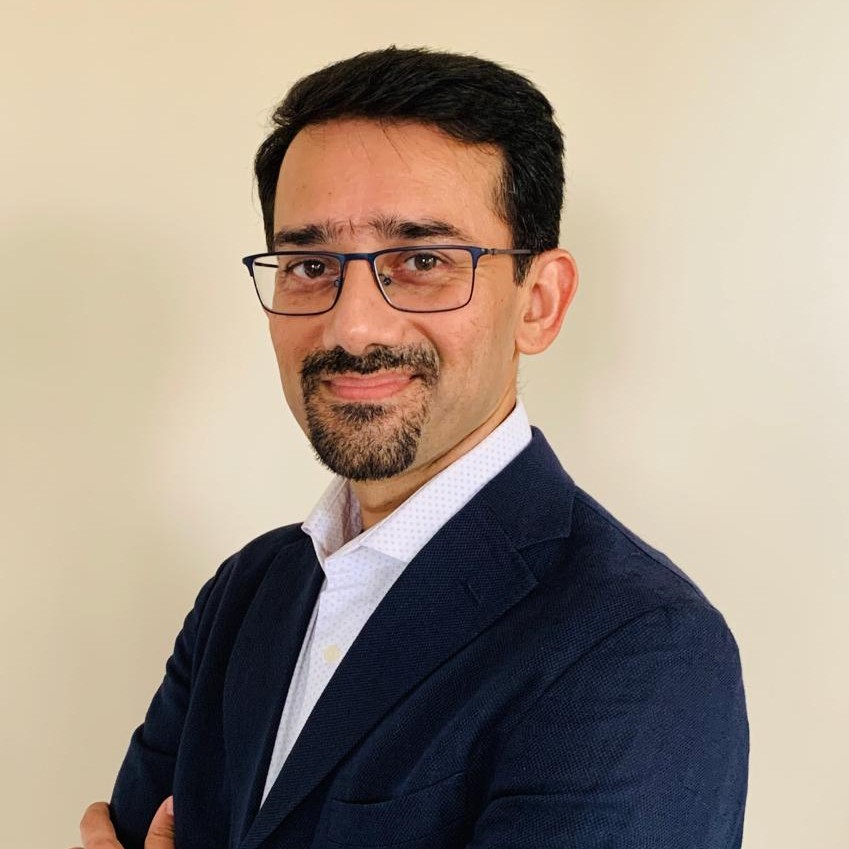
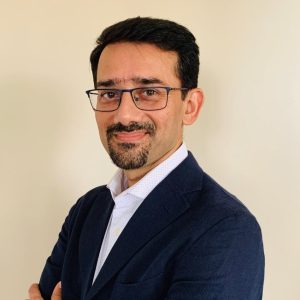
In this #MeetTheMB100 interview, , Pushkar Pradhan, Founder & CEO of Ecosense Enviro, discusses the challenges facing the waste management industry, including working with the public sector, and how their solution is bringing visibility and accountability into everyday waste operations.
This interview series is sponsored by EY, Hogan Lovells, The Portman Estate and Forster Communications.
Long Form Questions
Meaningful Business (MB): What are the challenges you are trying to solve and who are the main beneficiaries?
Pushkar Pradhan (PP): Most cities don’t struggle with collecting waste, but with knowing what’s actually happening to it. Waste management is often treated as a logistics problem, but in reality, it is a challenge of coordination and visibility. Collection, transport, and processing systems typically operate in silos, with very little real-time data to understand performance on the ground. This lack of visibility leads to inefficiencies, poor segregation, environmental leakages, and an increasing dependence on landfills.
While many cities have adopted ‘smart’ waste initiatives, the tools available often fall short when it comes to monitoring daily operations in a practical way. Our work focuses on bridging this gap by digitising waste systems end-to-end: bringing together data, IoT, and analytics to create transparency and accountability.
The primary beneficiaries are urban local bodies and the communities they serve. When systems work better, collection becomes more reliable, neighbourhoods stay cleaner, and environmental impact is reduced. At the same time, operators improve efficiency, and informal workers gain access to more structured systems that support better livelihoods. Ultimately, our goal is to reduce landfill dependency and enable a more circular waste ecosystem.
MB: What is your solution and what impact have you made to date?
PP: We started with a simple question: what if cities could see their waste systems as they actually operate, not as they are reported? Our solution is a digital platform that brings visibility into everyday waste operations. It connects household mapping, route tracking, vehicle monitoring, and facility operations -such as material recovery facilities and wet waste processing – into a single system that reflects real-time activity.
Rather than replacing existing processes, the platform is designed to work alongside them, making daily operations easier to track and improve. Teams can move away from manual logs and fragmented tools, and instead respond quickly using reliable, real-time insights.
Today, the platform supports operations across multiple cities in India, covering over 500,000 households and tracking more than 1,500 tonnes of waste each day. We have also worked internationally, including projects in Indonesia focused on tracing ocean-bound plastics and enabling plastic credit frameworks.
The impact shows up in practical ways: better segregation, reduced leakages, and improved traceability. These may seem like incremental changes, but together they create the foundation for more circular and sustainable waste systems.
MB: What has been the most complex or underestimated part of delivering this work?
PP: The hardest part of this work hasn’t been technology, it has been understanding people and systems. Waste management is inherently complex, involving municipal officials, contractors, supervisors, and frontline workers, each operating under different constraints. Many processes are informal, and introducing digital systems requires not just tools, but behavioural change. Early on, we underestimated how much time this would take. What looked efficient in theory often did not translate into practice. That experience forced us to rethink our approach – from building systems that people should use, to designing systems that people want to use.
This meant spending time in the field, observing workflows, and iterating continuously. Small details, for example how a worker logs a collection or how a supervisor reviews data, became critical to adoption.
At the same time, waste systems operate within evolving policy and contractual environments, where priorities can shift. Building flexibility into the platform has been essential. Over time, we’ve learned that success in this space comes not from perfect technology, but from solutions that adapt to real-world complexity.
MB: What is the biggest threat to you right now and why?
PP: The biggest risk we face is inertia. In the public sector, change takes time. Even when there is clear interest in improving waste systems, scaling solutions across cities requires alignment between budgets, contracts, and multiple stakeholders. This naturally slows down adoption.
There is also a perception challenge. Waste management is often seen purely as a cost, which makes it harder to prioritise investments in digital systems – even when they improve efficiency and reduce long-term expenses. At the same time, fragmentation is an emerging concern. Cities sometimes adopt multiple point solutions that do not integrate well, making it harder to build a unified view of operations.
Our focus has been to demonstrate value through real deployments. When stakeholders can see tangible improvements -better visibility, improved efficiency, and measurable outcomes – the conversation shifts. Adoption may be gradual, but once trust is established, it becomes far more sustainable and scalable.
MB: What is your ambition for the future of your business, and what support do you need to increase your impact?
PP: We believe the future of waste management will be defined not just by infrastructure, but by intelligence. Our ambition is to make digital monitoring a standard part of how cities manage waste. Beyond tracking operations, we aim to build systems that actively support decision-making – optimising routes, improving recovery rates, and enabling traceability for circular economy initiatives such as recycling and extended producer responsibility (EPR).
By 2030, we aim to support over 100 cities across India and other emerging markets in Southeast Asia, Africa, and the Middle East. Our goal is to help track and manage more than 10,000 tonnes of waste per day through the platform, while contributing to measurable reductions in emissions.
To get there, we need three things. First, access to city-level deployments through partnerships with municipalities, operators, and corporates. Second, strategic collaborations with organisations working on urban and climate initiatives. And third, patient capital to continue building and scaling the platform responsibly.
Ultimately, our goal is simple -to make better waste management not just possible, but practical at scale.
Quickfire Questions
MB: Can you share a mistake that you’ve learned from?
PP: We tried introducing technology before fully understanding realities on the ground. Adoption improved only when we redesigned it around how people actually work.
MB: What is something you wish you were better at?
PP: Stepping back and delegating faster as the organisation grows.
MB: What are you most proud of about your work?
PP: Seeing something we built being used every day by field teams – that’s the real impact.
MB: What is the one book that everyone should read?
PP: The Compound Effect by Darren Hardy
MB: What are the sites, blogs or podcasts that you can’t imagine your day without?
PP: I tend to follow practical case studies, industry reports, and conversations with practitioners rather than any single source.