

How Zowasel is creating an efficient, inclusive, and investable agricultural ecosystem

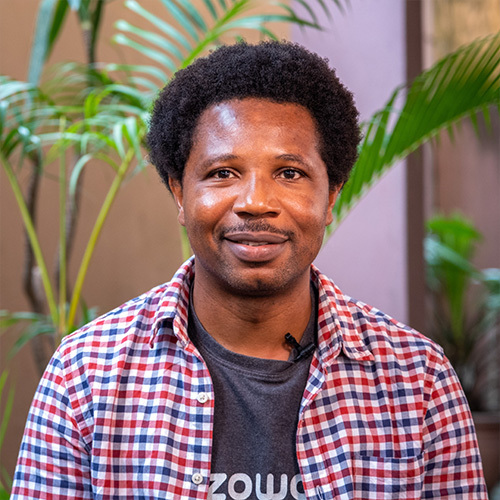
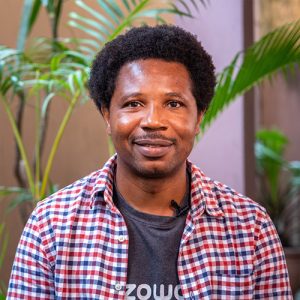
In this #MeetTheMB100 interview, Jerry Oche, Founder & CEO of Zowasel, describes their cohesive platform for a more structured, data-driven, and investable system, and how African agriculture still represents a massive, underdeveloped asset class.
This interview series is sponsored by EY, Hogan Lovells, The Portman Estate and Forster Communications.
Long Form Questions
Meaningful Business (MB): What are the challenges you are trying to solve and who are the main beneficiaries?
Jerry Oche (JO): At its core, the problem we are solving is a structural market failure. Smallholder farmers produce the majority of food across Africa, yet they remain largely excluded from formal financial systems, lack pricing power, and operate within fragmented and inefficient value chains. This disconnect results in low productivity, limited income growth, and vulnerability to climate shocks.
At the same time, global buyers and agribusinesses are under increasing pressure to source traceable, sustainable, and ESG-compliant commodities. However, they struggle to achieve this due to unreliable supply chains and a lack of verifiable data at the production level.
Zowasel was built to bridge this gap. We sit at the intersection of market access, finance, and climate intelligence – creating a system where farmers can access structured markets and capital, while buyers secure reliable, compliant supply. The beneficiaries are therefore both ends of the value chain: smallholder farmers and cooperatives on one side; and processors, FMCGs, and global traders on the other. Ultimately, this creates a more efficient, inclusive, and investable agricultural ecosystem.
MB: What is your solution and what impact have you made to date?
JO: Our solution is to build infrastructure that integrates trade, finance, and sustainability into a single, cohesive platform. Zowasel enables farmers and cooperatives to access structured markets while embedding alternative finance mechanisms that allow them to produce and deliver at scale.
A key component of this system is our Crop Pilot measurement, reporting, and verification (MRV) platform, which generates verifiable data on carbon outcomes and regenerative practices. This allows us to link agricultural production with climate finance, creating additional revenue streams for farmers through carbon-linked incentives.
To date, we have engaged over 2 million smallholder farmers and more than 4,000 cooperatives, and mobilising over $6 million in blended and trade-linked finance. Beyond the numbers, the real impact is in shifting agriculture from an informal, high-risk sector into a more structured, data-driven, and investable system.
MB: What has been the most complex or underestimated part of delivering this work?
JO: The most complex and often underestimated part of this work is aligning incentives across a highly fragmented ecosystem. Agriculture involves multiple stakeholders – farmers, aggregators, processors, financiers, and buyers – each operating with different expectations, timelines, and risk tolerances.
For instance, farmers require immediate liquidity, while buyers often operate on extended payment cycles. Financial institutions need risk mitigation backed by reliable data, while climate programs require measurable and verifiable outcomes. Bringing these elements together into a cohesive and functioning system requires more than technology; it requires trust, coordination, and disciplined execution.
Another underestimated challenge is building credible data systems at scale. Ensuring that MRV data is accurate, auditable, and accepted by institutional partners, while operating in remote and resource-constrained environments, requires significant investment in both technology and on-ground operations.
Over time, we’ve learned that success in this space depends on building resilient systems that integrate finance, technology, and human relationships – and not just scaling digital tools.
MB: What is the biggest threat to you right now and why?
JO: The most significant threat we face today is not competition, but the mismatch between the scale of the opportunity and the structure of available capital. Agriculture in Africa represents a massive, underdeveloped asset class, yet it remains underfunded relative to its economic and social importance.
Much of the available funding is either too short-term or not designed to accommodate the complexity of agricultural value chains. In addition, macroeconomic volatility,including currency fluctuations, inflation, and supply chain disruptions, increases pressure on producers and buyers, making execution more challenging.
That said, we also see this as an inflection point. As global demand for traceable, sustainable supply chains increases, platforms that can provide transparency, financing, and compliance will become essential infrastructure within the agricultural sector.
MB: What is your ambition for the future of your business, and what support do you need to increase your impact?
JO: Our ambition is to position Zowasel as a pan-African infrastructure layer for agricultural trade, finance, and climate intelligence. We are building a system that enables farmers to transition to regenerative practices while unlocking access to global markets and climate finance.
A key priority is scaling our MRV and carbon infrastructure so that smallholder farmers can participate meaningfully in global carbon markets. At the same time, we are expanding our cross-border trade capabilities, leveraging emerging financial rails such as PAPSS (the pan-African payment and settlement system) and platforms like MANSA to improve liquidity, trust, and transaction efficiency across African markets.
To accelerate this vision, we require aligned capital partners, stronger institutional collaboration, and supportive policy frameworks. In particular, blended finance, trade finance, and climate-linked funding will be critical in unlocking scale.
Quickfire Questions
MB: Can you share a mistake that you’ve learned from?
JO: One of my early mistakes was trying to scale before the system was ready. I’ve learned that in agriculture, sequencing matters: market access, finance, and operations must be aligned before scaling sustainably.
MB: What is something you wish you were better at?
JO: I wish I had learned to delegate earlier. Building strong systems and trusting teams sooner would have accelerated both growth and impact.
MB: What are you most proud of about your work?
JO: I’m most proud of helping smallholder farmers move from informal, fragmented markets into structured value chains where they can access finance, better pricing, and new income opportunities.
MB: What is the one book that everyone should read?
JO: I recommend two that complement each other. Start-Up Nation by Dan Senor and Saul Singer offers a powerful lesson on how bold thinking and resilience can turn constraints into innovation, captured in the line, “It was not simple to convince people that growing fish in the desert makes sense.” It reminds me that breakthrough ideas often look irrational at first.
Alongside that, The Hard Thing About Hard Things by Ben Horowitz grounds you in the reality of execution and what it truly takes to build, lead, and survive through uncertainty. Together, they reflect the balance between vision and resilience required to build something meaningful.
MB: What are the sites, blogs or podcasts that you can’t imagine your day without?
JO: I regularly follow insights from the World Bank, IFPRI (International Food Policy Research Institute), and AgFunder, as well as from climate finance and emerging-market platforms that connect agriculture to global capital flows.