

How AgriVijay is aiming to become India’s leading full-stack renewable energy provider for rural communities

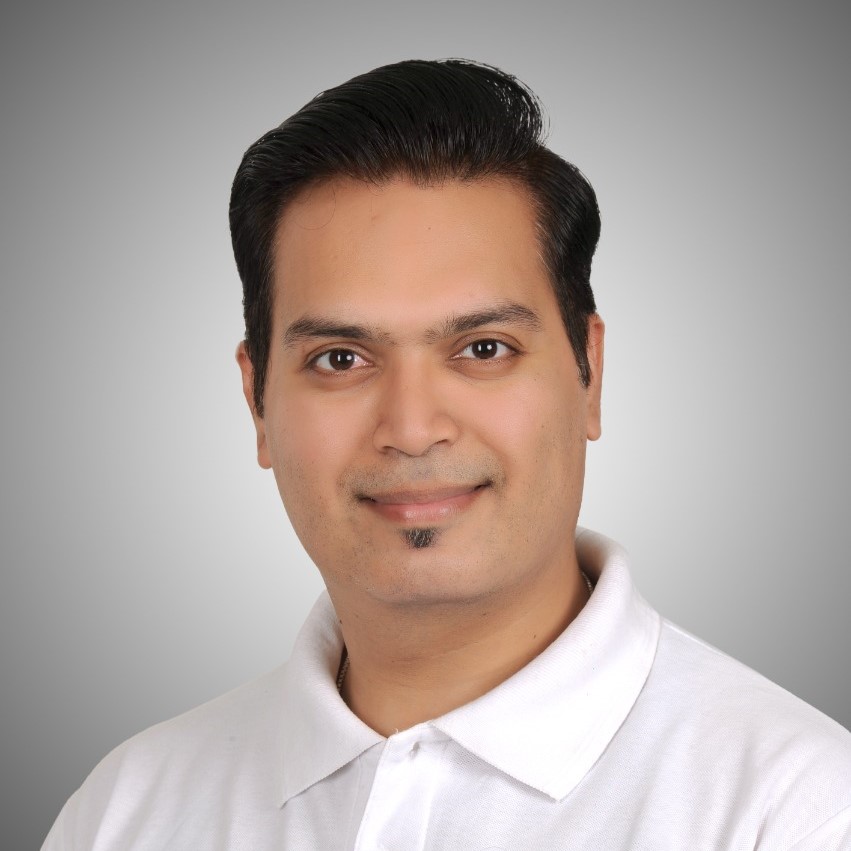
In this #MeetTheMB100 interview, Vimal Panjwani, Founder & CEO of AgriVijay, shares how they have built India’s first curated marketplace focused on renewable and green energy solutions for rural households, and the challenges around securing sustained funding within a cautious agritech investment landscape.
This interview series is sponsored by EY, Hogan Lovells, The Portman Estate and Forster Communications.
Long Form Questions
Meaningful Business (MB): What are the challenges you are trying to solve and who are the main beneficiaries?
Vimal Panjwani (VP): Many rural households in India face energy poverty, dependence on diesel and firewood, unreliable grid supply, and annual energy expenses of USD 180-240 approximately per farmer.
At the same time, 20–40% post-harvest losses, underutilized agricultural waste, and climate risks such as erratic monsoons restrict income growth and increase vulnerability. These issues also contribute to rising greenhouse gas emissions, health hazards from smoke exposure, and ongoing financial stress for smallholders.
Through solar pumps, biogas digesters, and solar dryers, AgriVijay reduces energy costs by 20–40%, converts farm waste into clean cooking fuel, and enhances crop preservation to minimize losses
MB: What is your solution and what impact have you made to date?
VP: We have built India’s first curated marketplace focused on renewable and green energy solutions for farmers and rural households.
Bringing solar, biogas, electric, agri-tech, and organic solutions under one roof, we follow a unique energy advisory recommendation approach wherein the team assesses a farmers’ energy needs, agricultural practices, and available farm waste before recommending, financing, delivering, and deploying suitable solutions.
Our offerings also include free solar insurance, long-term warranties, assured after-sales service, and EMI/financing options—enabling farmers to become renewable energy producers and consumers.
The enterprise has impacted 10,000+ rural families across 595+ villages in 18+ states, empowering 6,210+ women, generating ₹2.87+ crore in savings, and creating 432+ green jobs.
MB: What has been the most complex or underestimated part of delivering this work?
VP: Delivering reliable after-sales service in rural areas has been one of the most complex aspects of AgriVijay’s journey. Farmers often purchase components from multiple vendors, creating challenges in installation, integration, and long-term maintenance. We addressed this gap through our end-to-end village renewable energy store model and AI-enabled support systems.
However, sustaining consistent service delivery in remote regions with poor connectivity proved more difficult than anticipated. Fundraising in a cautious agritech investment climate nearly forced us to shut down in its third year, despite strong early growth.
Additionally, inadequate rural infrastructure, local skill gaps, and initial reluctance among farmers to adopt renewable technologies added further operational complexity.
We also underestimated the fragmentation of the rural service ecosystem and the difficulty of balancing social impact with financial sustainability after incubation support ended. This required strategic pivots, including a B2B2C scaling approach and deeper institutional collaborations with organizations such as NABARD and NITI Aayog. Building trust through localized, multilingual advisory services across 595+ villages demanded significant time and resources, but these efforts ultimately contributed to achieving profitability in FY24–25.
MB: What is the biggest threat to you right now and why?
VP: The biggest threat is securing sustained funding within a cautious agritech investment landscape. Investor confidence remains fragile following multiple high-profile agritech shutdowns despite significant funding rounds.
This environment nearly forced us to close in our third year before strategically pivoting to a B2B2C model. Although we achieved profitability in FY24–25 and recorded 105% year-on-year growth, current funding (primarily smaller rounds from institutions like NABARD and angel investors) limits our ability to hyper-scale toward our vision of establishing 10,000 renewable energy stores across rural India.
The rural renewable energy sector also involves long gestation periods, requiring consistent proof of return on investment while navigating fragmented service ecosystems and farmer hesitation toward new technologies. These realities place pressure on cash flows, particularly for maintaining strong after-sales service and expanding into new geographies.
Without access to larger growth capital, we risk slower expansion, supply chain constraints, or competitive pressures that could impact our presence across the 595+ villages we operate in. While strategic partnerships provide stability and credibility, they cannot fully offset the vulnerability created by limited large-scale institutional funding.
MB: What is your ambition for the future of your business, and what support do you need to increase your impact?
VP: We aim to become India’s leading full-stack renewable energy provider for rural communities by 2030. We envision scaling to 10,000 village-level renewable energy stores and onboarding 10 lakh farmers and rural households as both energy producers and consumers. Our long-term goal is to abate 10 lakh tons of greenhouse gas emissions while expanding into emerging areas such as agrivoltaics, carbon credit enablement, KCC assistance, and climate-positive farming models across India and global rural markets.
Through this expansion, we aim to build energy-independent, self-reliant rural communities aligned with national and global net-zero ambitions.
To achieve this vision, the organisation requires strategic growth capital to enable hyper-scaling following profitability. Stronger partnerships for supply chain management and reliable after-sales service in remote regions will also be a critical factor.
Quickfire Questions
MB: Can you share a mistake that you’ve learned from?
VP: Equity is the most expensive form of fundraising, hence raise cautiously with equity as an instrument.
MB: What is something you wish you were better at?
VP: I wish I was better at coding and building software or mobile apps.
MB: What are you most proud of about your work?
VP: Impacting lives and environment at scale – we have impacted 27,000+ farmer families with 1.24 lakhs tons of GHG/CO2 emissions being mitigated till date as a climate action contribution
MB: What is the one book that everyone should read?
VP: The $100 Startup
MB: What are the sites, blogs or podcasts that you can’t imagine your day without?
VP: LinkedIn, Economic Times, Mint, CNBC Business and Awaaz TV Channels. I also like reading biopics on various leaders.