


Creating a survivor-led social enterprise rooted in dignity and long-term economic empowerment
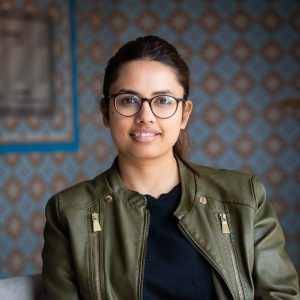
In this #MeetTheMB100 interview, Jeny Pokharel, Founder & CEO, SASANE Sisterhood Treking & Travel, demonstrates how ethical tourism can be a powerful pathway for female survivors of trafficking and discusses the challenges around balancing trauma-informed care with the demands of a tourism enterprise.
This interview series is sponsored by EY, Hogan Lovells, The Portman Estate and Forster Communications.
Long Form Questions
Meaningful Business (MB): What are the challenges you are trying to solve and who are the main beneficiaries?
Jeny Pokharel (JP): I founded SASANE Sisterhood Trekking & Travels because I could no longer ignore the gap between rescue and real reintegration for female survivors of trafficking in Nepal. Too often, support ends at rehabilitation, but economic independence, dignity, and social belonging require much more than temporary assistance. Without sustainable livelihoods, many survivors remain vulnerable to stigma, isolation, and even re-exploitation.
What I am trying to solve is not only unemployment, but it is the deeper issue of how society views survivor women. I have seen how stigma follows them long after they leave trafficking situations. They are often defined by what happened to them, rather than by their strength, skills, and potential.
Through SASANE, I work to create dignified employment pathways within the trekking and tourism sector, positioning survivors as leaders, professionals, and decision-makers. Our main beneficiaries are these women, but the impact extends further. We are challenging narratives, reshaping industries, and proving that survivor-led enterprise is not charity, it is justice in action.
MB: What is your solution and what impact have you made to date?
JP: When I founded SASANE Sisterhood Trekking & Travels, I wanted to move beyond charity-based models and create a survivor-led social enterprise rooted in dignity and long-term economic empowerment. My solution was to integrate female survivors of trafficking directly into Nepal’s trekking and tourism industry, not as beneficiaries, but as professionals, leaders, and income earners.
We provide structured training in guiding, hospitality, communication, financial literacy, and leadership development. But beyond skills, we create something equally important: a supportive sisterhood environment where women rebuild confidence, reclaim identity, and strengthen their voice.
To date, we have supported survivor women in accessing stable employment, earning independent income, and stepping into public-facing roles within a traditionally male-dominated sector. Some women who once faced social exclusion are now confidently engaging with international clients and mentoring others.
The impact goes beyond financial security. I have witnessed women transform how they see themselves, from survivors of exploitation to architects of their own future. That shift, to me, is the most meaningful measure of success.
MB: What has been the most complex or underestimated part of delivering this work?
JP: The most underestimated part of building SASANE has been understanding that empowerment cannot be rushed. As a founder, I initially thought that if we created training, jobs, and structure, confidence and independence would naturally follow. What I’ve learned is that when you are working with survivors of trafficking, progress is not linear, and healing does not follow a business timeline.
Balancing trauma-informed care with the operational demands of a tourism enterprise has been one of the most complex challenges. We operate in a performance-driven industry where reliability, safety, and professionalism are critical. At the same time, I have a responsibility to ensure that every woman feels emotionally secure, supported, and never pressured beyond her capacity.
Another underestimated layer has been confronting social stigma. Even when women gain skills and employment, shifting community perceptions takes longer. As a leader, I’ve had to navigate these cultural realities while protecting the dignity of the women we work with. This work has required patience, resilience, and constant self-reflection. It has taught me that sustainable empowerment is built slowly, and intentionally.
MB: What is the biggest threat to you right now and why?
JP: The biggest threat right now is ensuring long-term financial sustainability while protecting the integrity of our mission. As a social enterprise rooted in survivor empowerment, we prioritise fair wages, capacity building, and trauma-informed support systems. These are non-negotiable but they also require stable revenue in an industry that is inherently volatile.
Tourism is sensitive to global economic shifts, political uncertainty, and environmental factors. Any disruption directly affects not only the business, but the women whose livelihoods depend on it. For many of them, this income represents independence and protection from re-exploitation. That responsibility weighs heavily on me as a Founder.
Another potential threat is scaling too quickly. There is growing interest in ethical and women-led tourism, which creates opportunity, but growth without strong systems and values alignment could dilute the safe, intentional environment we’ve built.
For me, the challenge is growing sustainably: expanding impact while safeguarding the dignity, safety, and leadership of the women at the heart of SASANE.
MB: What is your ambition for the future of your business, and what support do you need to increase your impact?
JP: My ambition is for SASANE to become a leading model of survivor-led social enterprise in South Asia, demonstrating that ethical tourism can be a powerful pathway for economic justice and long-term reintegration. I want to see more survivor women not only employed within the business, but stepping into management, decision-making, and eventually ownership roles.
In the future, I envision expanding our training programmes, strengthening leadership pipelines, and creating structured mentorship pathways so that women can grow professionally within the organisation. I also hope to build regional and international partnerships that connect survivor-led tourism with global responsible travel networks.
To increase our impact, we need strategic investment, long-term partnerships, and support in strengthening operational systems as we scale. Access to impact-driven investors and mentors experienced in growing mission-led enterprises would be invaluable.
Ultimately, my goal is simple but powerful: to ensure that survivor women are not defined by their past, but recognised for the businesses, leadership, and futures they build.
Quickfire Questions
MB: Can you share a mistake that you’ve learned from?
JP: Early on, I tried to carry everything myself, operations, strategy, emotional support. I learned that sustainable leadership requires delegation and trust. Building a strong team doesn’t weaken impact; it multiplies it.
MB: What is something you wish you were better at?
JP: Switching off. When your work is deeply tied to justice and real women’s lives, it’s difficult to separate rest from responsibility. I’m learning that protecting my own energy is part of protecting the mission.
MB: What are you most proud of about your work?
JP: I’m most proud of watching survivor women step into leadership, confidently guiding treks, mentoring others, and being recognised for their expertise rather than their past. That transformation is powerful.
MB: What is the one book that everyone should read?
JP: Ikigai by Héctor García and Francesc Miralles. It beautifully explores the intersection of purpose, passion, and livelihood, something I deeply relate to as a social entrepreneur building work rooted in meaning.
MB: What are the sites, blogs or podcasts that you can’t imagine your day without?
JP: Harvard Business Review for strategic thinking, Brené Brown’s podcast for leadership and vulnerability, and development platforms like Devex to stay connected to global social impact conversations.