


How Recycllux aims to become the operating system for marine plastic recovery

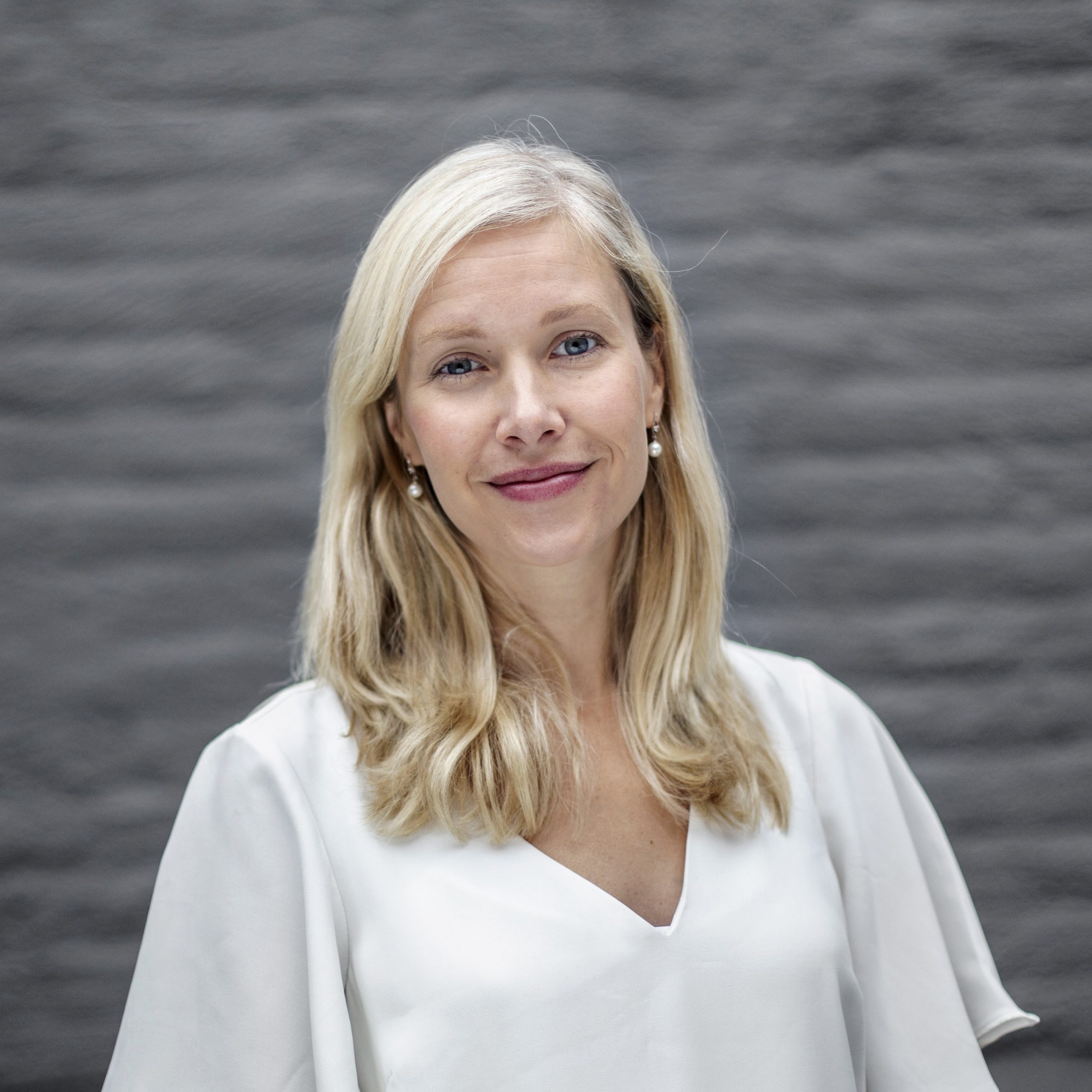
In this #MeetTheMB100 interview, Sorina Uleia, Founder & CEO of Recycllux, discusses the opportunity and challenges around building a new category in the marine recovery and plastic credit space, and exploring the model of intervention-as-a-service.
This interview series is sponsored by EY, Hogan Lovells, The Portman Estate and Forster Communications.

Long Form Questions
Meaningful Business (MB): What are the challenges you are trying to solve and who are the main beneficiaries?
Sorina Uleia (SU): Plastic pollution is visible, but not actionable. Every year, 23 million tonnes of plastic enter our seas, yet the response remains fragmented, reactive, and largely unverifiable. Cleanup efforts are disconnected from each other. Data is inconsistent and there is no shared infrastructure to coordinate action or prove that it happened. I saw this firsthand, swimming with my children in the Black Sea when a wave of plastic hit us. That moment made it personal. At the same time, companies face increasing regulatory pressure through Extended Producer Responsibility (EPR) and Corporate Sustainability Reporting Directive (CSRD), but lack credible tools to demonstrate real impact, leaving them exposed to greenwashing risk.
Our work benefits multiple groups: corporates gain traceable, audit-ready environmental action; public authorities get decision-making tools to direct resources where they matter most; and coastal communities, especially fishers and NGOs, gain new income streams by becoming active participants in the recovery chain. Ultimately, the marine ecosystems themselves begin to regenerate as plastic waste is systematically removed.
MB: What is your solution and what impact have you made to date?
SU: Recycllux is the first operating system for marine plastic recovery. We use satellite data and AI to detect pollution hotspots, then activate local cleanup networks of fishers and NGOs to carry out targeted interventions. Every kilogram recovered is tracked through blockchain-based traceability, giving companies auditable proof of environmental impact. We call the model Intervention-as-a-Service, where companies pay annual subscriptions, communities earn income, and every kilogram is accounted for.
The technology is ours, and the execution is local – that’s the key. Rather than deploying fleets or heavy infrastructure, we orchestrate existing local capacity, which delivers a carbon footprint up to 46 times lower than traditional cleanup approaches. We scale like software and we move plastic in the real world.
Beyond plastic removal, our impact extends to CO₂ reduction, circular material flows, and direct job creation in coastal economies, proving that environmental restoration and economic viability can reinforce each other.
MB: What has been the most complex or underestimated part of delivering this work?
SU: The most underestimated challenge is not the technology, it’s orchestration. We are not selling something that already exists on the market. We are building a new category.
Marine plastic recovery sits at the intersection of multiple fragmented systems: satellite data, local operations, regulatory frameworks, and corporate reporting. Each works reasonably well in isolation, but aligning them into a single coherent system that people actually trust is an entirely different problem. What has proved hardest is building a reliable end-to-end chain: translating satellite insights into real-world interventions on the ground, coordinating diverse local actors with different incentives and constraints, and ensuring data integrity across the entire lifecycle of every intervention.
The real complexity lies in creating operational trust at scale, between corporates paying for impact, communities delivering it, and the data systems that connect them. This required building an ecosystem, designing governance mechanisms, and continuously challenging our own assumptions in real-world conditions. It’s also where our strongest moat is being built.
MB: What is the biggest threat to you right now and why?
SU: The biggest threat is not competition, it’s market timing and standards uncertainty. The marine recovery and plastic credit space is emerging rapidly, but the certification frameworks that underpin it are still evolving. This creates a real gap between growing corporate demand and fully standardised validation mechanisms. That ambiguity is risky for everyone. At the same time, large incumbents and simplified ‘offset’ solutions risk flooding the market with low-integrity alternatives. If buyers cannot easily distinguish between credible impact and superficial claims, trust erodes across the entire sector and that hurts the serious players most.
Our strategy is to stay ahead by building high-integrity, data-backed verification from day one, aligning early with regulatory frameworks like EPR and CSRD, and demonstrating real, measurable impact through active pilots and paying customers. I have spent 20 years in enterprise technology and built and exited a company before. I know that in an emerging market, trust is the real currency and we are building Recycllux to be the standard others are measured against.
MB: What is your ambition for the future of your business, and what support do you need to increase your impact?
SU: Our ambition is to become the operating system for marine plastic recovery, the shared infrastructure that connects detection, intervention, and verified impact at scale. We opened our Mediterranean base in Malta in December 2025. The Black Sea was our proving ground;the Mediterranean is our growth market. Over the next five years, we aim to expand further across Europe and then globally, supporting thousands of verified interventions annually and enabling companies and authorities to act through real-time, data-driven decision-making.
Our team already spans eight countries, and that international DNA is central to how we scale. To get there, we need strategic customers willing to grow with us beyond initial pilots, partnerships with coastal and port authorities, and access to blended finance combining grants with impact capital. We also need continued involvement in the standard-setting processes that will define this industry. We turn ocean pollution from an unsolved crisis into verified, investable impact. The faster we align capital, policy, and execution, the faster we scale that impact.
Quickfire Questions
MB: Can you share a mistake that you’ve learned from?
SU: Trying to solve too many layers at once. What we learned is the importance of sequencing validating step by step, then scaling. Focus beats complexity.
MB: What is something you wish you were better at?
SU: Scaling requires a shift from doing to enabling. The challenge isn’t just delegating but creating the right structure where people can make decisions confidently and independently. I’m continuously working on that transition.
MB: What are you most proud of about your work?
SU: Turning a complex, fragmented problem into something measurable, actionable, and trusted, while creating real income for coastal communities who are at the front line of the crisis.
MB: What is the one book that everyone should read?
SU: Doughnut Economics by Kate Raworth. It fundamentally reframes how we think about growth, planetary boundaries, and what a sustainable economy can actually look like.
MB: What are the sites, blogs or podcasts that you can’t imagine your day without?
SU: Two podcasts I consistently recommend: BlueTech Around the World hosted by my Co-Founder Marilou Suc, and the AI Everywhere® Leaders podcast by Adriana Pricope – both bring sharp, practical perspectives.