

Providing high-quality healthcare for the ‘missing middle’

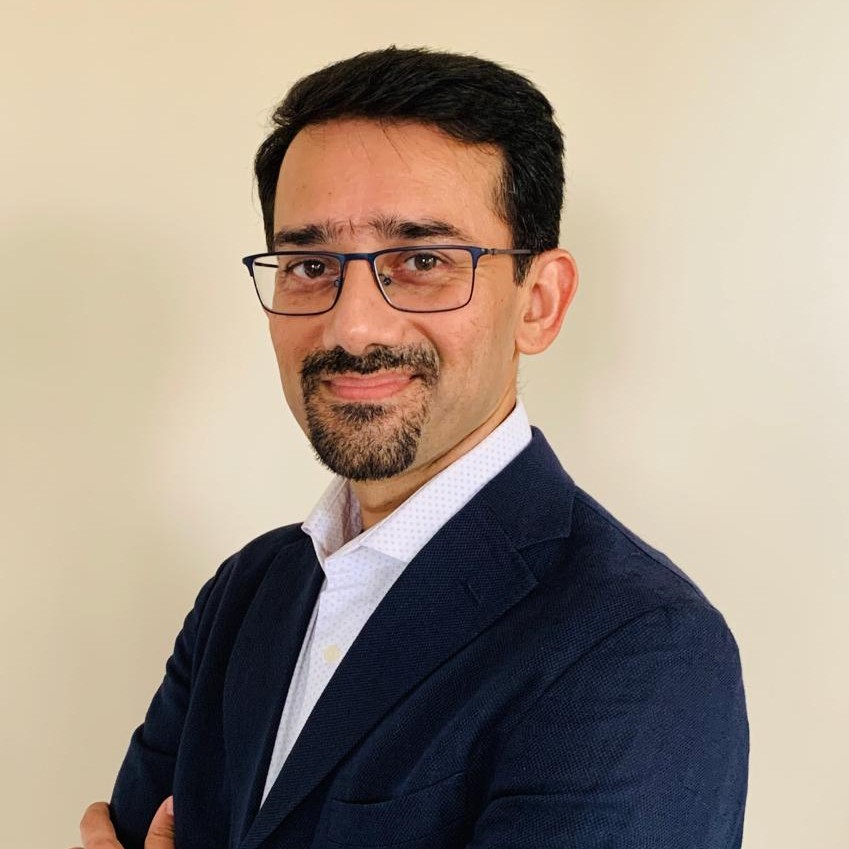
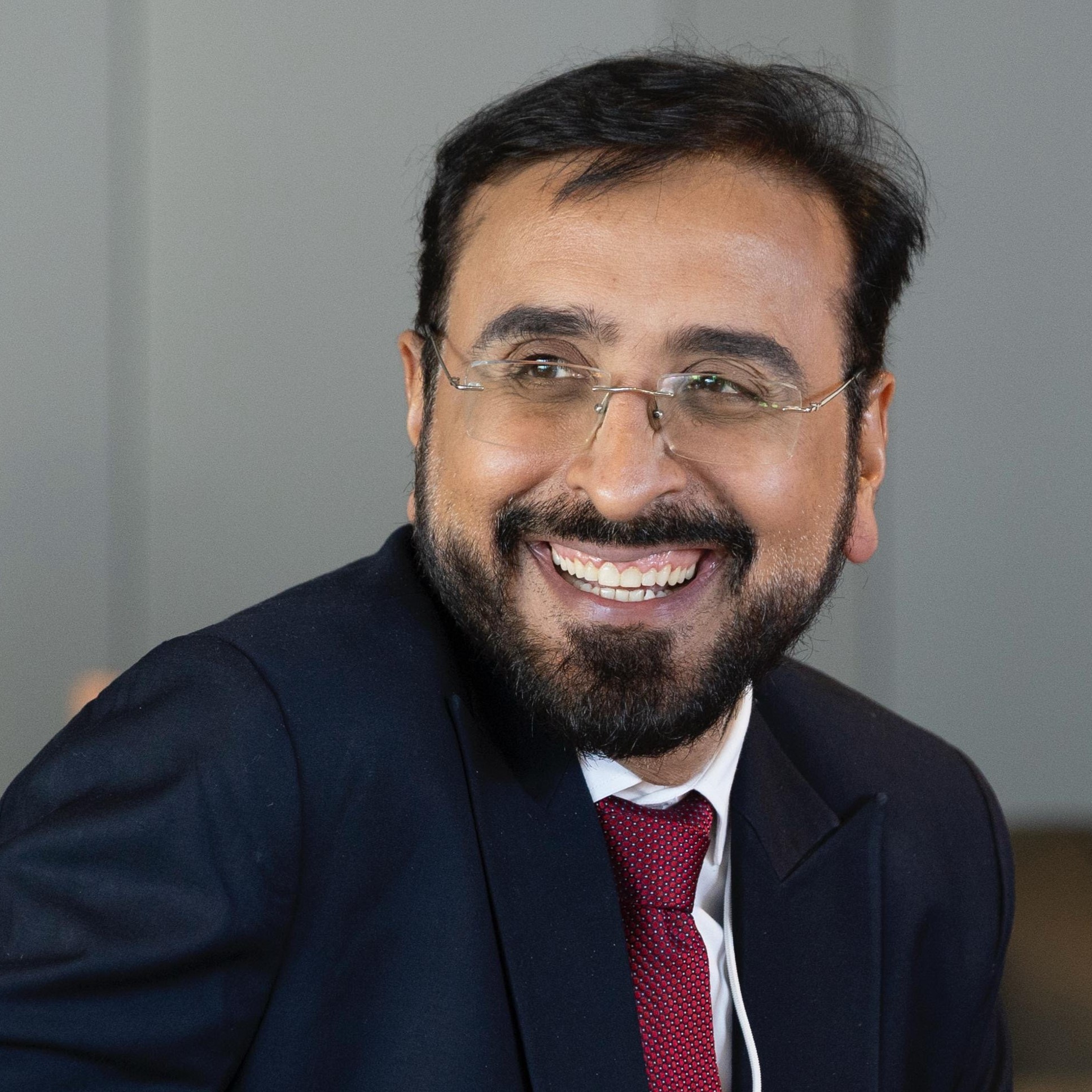
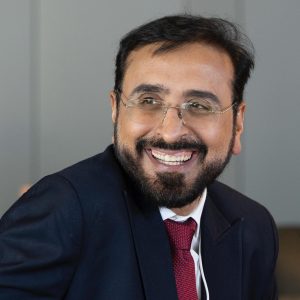
In this #MeetTheMB100 interview, Shuchin Bajaj, Founder Director of Ujala Cygnus Hospitals, explains how they are providing healthcare for underserved populations in tier-2 and tier-3 cities in India, and the systems-change required to align quality, affordability and financing structures.
This interview series is sponsored by EY, Hogan Lovells, The Portman Estate and Forster Communications.
Long Form Questions
Meaningful Business (MB): What are the challenges you are trying to solve and who are the main beneficiaries?
Shuchin Bajaj (SB): India’s healthcare system faces a paradox: world-class care exists, but access to it is deeply unequal. Nearly 65–70% of India’s population lives in tier-2 and tier-3 towns, where quality secondary and tertiary care is either unavailable or unaffordable. This leads to delayed treatment, high out-of-pocket expenditure, and, often, preventable mortality.
At Ujala Cygnus, we are solving for this ‘missing middle’ in healthcare delivery – bringing high-quality, NABH-accredited (National Accreditation Board for Hospitals and Healthcare Providers) care closer to where people live, rather than forcing them to travel to the metro cities.
Our primary beneficiaries are low-and-middle-income families in underserved regions, who typically fall through the cracks – not poor enough for free care, yet unable to afford private metropolitan hospitals.
We also serve an often-overlooked stakeholder: local medical talent. By building high-quality institutions in smaller towns, we are creating ecosystems where doctors and nurses can build meaningful careers without migrating to big cities.
MB: What is your solution and what impact have you made to date?
SB: Our approach is to build a distributed network of hospitals that combine clinical excellence with cost-efficiency -what I describe as “frugal quality”. We leverage standardised protocols, technology, and strong governance to deliver outcomes comparable to metro hospitals, but at significantly lower costs.
Today, Ujala Cygnus operates 25+ hospitals across north India, with nearly 2,800 beds, providing services ranging from critical care and cardiology to orthopaedics and oncology. Many of these services were previously unavailable in these geographies.
Beyond hospital infrastructure, our Sehat Chaupals initiative focuses on preventive healthcare and early detection in rural communities, helping reduce disease burden before it becomes catastrophic.
To date, we have touched millions of lives, both through inpatient care and community outreach. More importantly, we have demonstrated that high-quality healthcare for underserved populations can be a sustainable, scalable business model.
MB: What has been the most complex or underestimated part of delivering this work?
SB: The most underestimated challenge is not infrastructure or capital – it is trust and mindset.
In many underserved regions, patients have historically relied on informal providers or delayed care due to cost concerns. Convincing them to seek timely, evidence-based treatment requires deep community engagement, not just clinical capability.
Equally complex is building and retaining high-quality clinical talent in non-metro areas. It requires creating not just jobs, but purpose-driven institutions where professionals feel they are part of something larger than themselves.
Another underestimated aspect is aligning quality with affordability. Delivering NABH-level care at lower price points demands relentless process innovation, tight cost controls, and a culture of accountability.
Ultimately, this is not just a healthcare delivery challenge – it is a systems change effort, requiring shifts in behaviour, incentives, and expectations across the ecosystem.
MB: What is the biggest threat to you right now and why?
SB: The biggest threat is the misalignment between healthcare quality and financing structures.
In India, reimbursement systems, whether government schemes or private insurance, often do not adequately reward quality. This creates a risk where providers who invest in better infrastructure, processes, and outcomes are not proportionately compensated.
Additionally, access to patient, long-term capital remains a challenge for healthcare providers focused on underserved markets. Short-term financial pressures can conflict with the long gestation periods required to build trust and clinical excellence.
There is also a broader systemic risk: if quality healthcare in smaller towns becomes financially unsustainable, the gap between urban and rural healthcare will widen further.
MB: What is your ambition for the future of your business, and what support do you need to increase your impact?
SB: I often think about a patient in a small town who has to travel hundreds of kilometres to access something as basic as an ICU bed or a cancer diagnosis. Our ambition is to make that journey unnecessary.
We want to build a healthcare system where high-quality care is available closer to home, where a family does not have to choose between affordability and survival. Over the next decade, we aim to expand deeper into Tier-2 and Tier-3 India, while also creating centres of excellence in areas like oncology and cardiac care—bringing advanced treatment to places that have historically been left out of India’s healthcare growth story.
Technology will play a critical role in this journey. We see digital health and AI not as standalone innovations, but as enablers that can extend care beyond hospital walls, improve clinical decision-making, and create continuity of care.
To truly scale this impact, however, we need patient, mission-aligned capital, supportive policy frameworks that reward quality, and strong partnerships across sectors.
Quickfire Questions
MB: Can you share a mistake that you’ve learned from?
SB: Early on, I underestimated the importance of institutionalising processes. Relying too much on individual excellence doesn’t scale. Systems, culture, and governance are what truly sustain impact over time.
MB: What is something you wish you were better at?
SB: I wish I were better at navigating the tension between mission and market expectations, while also influencing policy faster at a systemic level. In small-town healthcare, many of the biggest constraints are not operational, but structural: pricing, reimbursement, talent pipelines.
As we scale, the challenge is to stay deeply mission-driven without being constrained by capital pressures, and to engage more effectively with policymakers so that the system evolves alongside the work we’re doing on the ground.
MB: What are you most proud of about your work?
SB: That we have been able to bring dignity and quality to healthcare in places where it was missing, and prove that serving underserved communities can be both impactful and sustainable.
MB: What is the one book that everyone should read?
SB: The Bhagvad Gita is a wonderful book to understand the deeper nuances of the world, and I have read it multiple times. Catch 22 is another one of my favourite books. Good to Great is another read I like, particularly for its insights on disciplined leadership, building enduring institutions, and the importance of getting the right people on the bus.
MB: What are the sites, blogs or podcasts that you can’t imagine your day without?
SB: I regularly follow the World Economic Forum, The Aspen Institute, Catalyst 2030 and MB100 for broader perspectives on systems, technology, and leadership.