

Pioneering a Circular Bamboo Industry in Sichuan

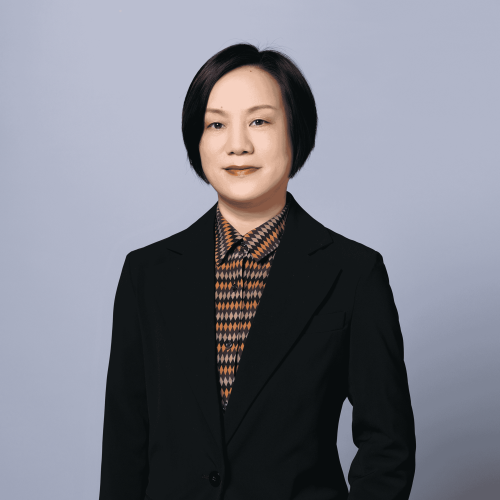
In this #MeetTheMB100 interview, Genlian Shen, Chairman of Sichuan Vanov New Materials, shares how they are increasing farming prosperity in Sichuan and building a closed-loop bamboo industrial chain from the ground up.
This interview series is sponsored by EY, Hogan Lovells, Green Frontier Capital, Kenya Climate Ventures (KCV), The Portman Estate, and innovision.

Genlian Shen, Chairman, Sichuan Vanov New Materials
Meaningful Business (MB): What are the challenges you are trying to solve, and why do they matter to you?
Genlian Shen (GS): The southwestern province of Sichuan is home to one of the largest bamboo forests in China, but crop yields are unpredictable, farmers’ incomes are relatively low, and an absence of research and development means that a significant amount of bamboo pulp is going to waste.
But bamboo isn’t just a crop; it’s a vehicle for equitable growth and planetary health. Growing rapidly and requiring a minimal amount of pesticides and water, bamboo has the potential to be an environmentally and socially sustainable resource.
As Chairman of Sichuan Vanov New Materials, I am driven by a dual mission – to ensure that local farmers thrive, and to pioneer a new kind of bamboo production that is circular and sustainable.
MB: How are your programmes tackling these challenges and what impact are they having?
GS: Our efforts focus on the three systemic challenges associated with bamboo production in Sichuan:
Yield: We developed BABO, a high-yield bamboo fibre that grows well using bio-fertilisers made from processing waste. Coupled with modern forest management programmes, we have significantly increased farmer incomes.
Research and Development: Through in-depth and comprehensive R&D on bamboo fibres, we have established a closed-loop industrial chain that spans from bamboo pulp to fibre materials. Partnering with institutions like the Chinese Academy of Sciences, we have developed a low-pollution extraction method that reduces COD emissions by 60%.
Brand Value: The adaptability of our bamboo fibre bio-based materials enables us to reach new global markets. With nearly 97% of all Sichuan bamboo previously being used for papermaking processes, we can now diversify its application and provide daily necessities products to consumers and bamboo fibre materials to clients worldwide.
MB: How do you work with partners and the broader ecosystem to achieve your mission?
GS: Collaboration is a core component of our business model. Whether we’re co-developing bamboo-specific fertilisers, partnering with packaging and transportation firms, or working with local village communities to implement modern forestry practices, we believe that partnerships drive the development of the bamboo industry.
MB: What is your ambition for the future of your business, and how do you measure success?
GS: We are working towards creating a global bamboo fibre ecosystem where 100% of bamboo biomass is valorised. With a focus on carbon neutrality, farmer prosperity, and scientific innovation, we aim to establish Sichuan as a global hub for sustainable bamboo solutions.
Quickfire Questions
MB: Can you share a mistake with us that you’ve learned from?
GS: Initially, I underestimated the complexity of bamboo fibres. Developing deep technology solutions requires patience and resilience. Now, we invest incrementally, validate lab-to-pilot rigorously, and embrace open innovation.
MB: What is something you wish you were better at?
GS: Balancing scale with agility. As we grow, maintaining lean decision-making while managing a complete industrial chain (from farms to global brands) demands sharper organisational design.
MB: What underrated skill do you wish more impact-focused leaders invested time and energy in?
GS: Cross-sectoral negotiation. Bridging relationships between farmers, scientists, governments, organisations, and global markets requires leaders to translate diverse incentives into shared goals— which is a make-or-break skill for systemic change.
MB: What is the one book that everyone should read?
GS: Cradle to Cradle: Remaking the Way We Make Things by Michael Braungart and William McDonough. It redefines how we should think about manufacturing models and highlights the overlooked value of waste.
MB: What are the sites, blogs or podcasts that you can’t imagine your day without?
GS: We rely on networks like the International Bamboo and Rattan Organisation for industry trends, as well as outlets like Caixin and Bloomberg.