


How mbora is creating a full-circle microfinance system to support smallholder farming families
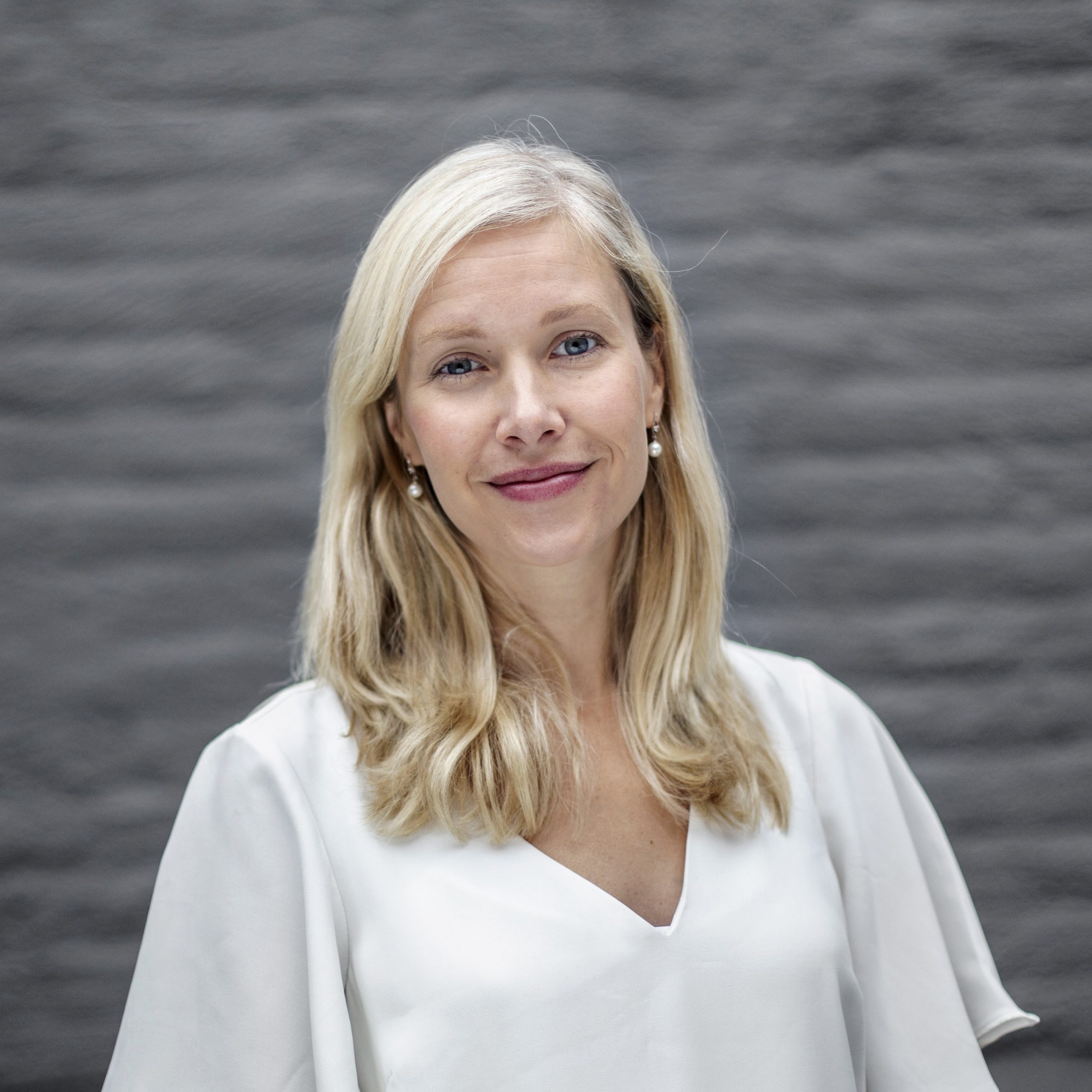
In this #MeetTheMB100 interview, Claudia Haak, Co-Founder & CFO (Actuary) of mbora, talks about the need and challenges of climate-adaptation finance, and how they are integrating climate-adaptive lending, agriculture, markets, and health services through one digital platform.
This interview series is sponsored by EY, Hogan Lovells, The Portman Estate and Forster Communications.

Long Form Questions
Meaningful Business (MB): What are the challenges you are trying to solve and who are the main beneficiaries?
Claudia Haak (CH): Seventeen million Malawians feed their families from rainfed fields. Climate change is destroying the conditions under which that is possible: drought frequency is doubling, crop failure rates hit 40–55%, and Cyclone Freddy in 2023 displaced 2.3 million people in a single event.
Climate change deepens the coordination failure between the services people need to survive. Finance, insurance, agricultural support, healthcare — they all exist in Malawi but operate in complete isolation from each other. A farmer gets drought-tolerance training but can’t afford the seeds. She accesses credit but has no buyer for unfamiliar crops. She improves her productivity but loses everything when her child’s malaria treatment forces her to sell the equipment she just bought. Each service solves one problem while leaving the others exposed. As climate shocks compound, so does the fragmentation.
As an actuary, I’ve spent my career modelling compounding risk. What I see in rural Malawi is a textbook case of correlated exposures with no diversification, except the people bearing those risks are mothers feeding their children, not items on a balance sheet. Our beneficiaries are smallholder farming families trapped in this coordination failure through no fault of their own.
MB: What is your solution and what impact have you made to date?
CH: mbora is the first regulated agri-fintech in Malawi to integrate climate-adaptive lending, agriculture, markets, and health services through one digital platform at village level. Instead of navigating disconnected institutions, a farmer accesses one system. She receives agricultural inputs and solar irrigation as an in-kind loan. Field agronomists guide her transition to climate-smart crops. Her chillis reach international buyers like Nando’s, while lemongrass and hibiscus supply national tea estates. When climate-driven illness hits her family, a hub clinic treats them without forcing her to sell productive assets. Across our microfinance services, 78% of clients are women.
We designed mboraMAX, our digital platform that connects everything. One integrated database records every member across finance, agriculture, and health. We don’t just see a loan, but we see a whole household. We can track whether a woman who received seed inputs also accessed the clinic when her child had malaria, and whether she still repaid on time. That connected data lets us model real resilience, not just repayment.
After six years, we serve 11,000+ members across three hubs. Our repayment rate is 95%, maintained through the worst drought and cyclone in Malawi’s recent history. Where comparable siloed programmes achieve 45% shock absorption, our integrated model achieves 92%. This year, we’re honoured to be nominated for the Earthshot Prize.
MB: What has been the most complex or underestimated part of delivering this work?
CM: Building trust. Not with investors or regulators, but with farming communities who have been promised transformation before and watched those promises leave with the project vehicles.
Trust in rural Malawi isn’t granted by a contract or a launch event. It’s earned by showing up in the same village, season after season, through drought and flood and cholera, and doing exactly what you said you would do. Our field agents are from the communities they serve.
I fly to Malawi five times a year and my three teenage children come with me when they can. Every time I sit with our women’s groups, I’m reminded that no spreadsheet captures what’s actually happening in a household. A woman explains that she used to repay other lenders on time but only because she skipped meals.That’s not resilience, that’s survival. Because mbora buys her crops and deducts the loan at the point of sale, she doesn’t have to make that choice. Those conversations changed how we design our products.
The hardest conversation I have is explaining that the thing that makes our model work, deep community trust, is also the thing that cannot be rushed.
MB: What is the biggest threat to you right now and why?
CH: Time. The climate projections for Malawi are accelerating faster than our ability to scale. Drought frequency is increasing from one-in-five years to one-in-three. Every season we don’t reach a community, more families cross the threshold from vulnerable to destitute; selling livestock, pulling children from school, clearing forest for charcoal.
I can model that threshold. I can tell you roughly when a family’s asset base drops below the point of recovery. What I can’t do is watch it happen in slow motion. The women I work with in Mangochi are mothers, and they want exactly the same thing I want for my own children: safety, education, a future that isn’t dictated by whether the rains come. The difference between us is geography and luck.
We have a proven model. We have 95% repayment through disaster. We have a regulatory licence and a digital platform. What we don’t have is the catalytic capital to scale from one district to six before the next compounding climate shock hits.
MB: What is your ambition for the future of your business, and what support do you need to increase your impact?
CH: Within five years, I want to demonstrate that climate-adaptation finance works when you coordinate it through a private-sector institution. The development sector has decades of excellent programmes, but they weren’t designed to coordinate with each other, and climate change demands exactly that coordination. Integrating finance, agriculture, health, and insurance into one system, accountable to a regulator and to borrowers, not just to a project cycle, that requires a regulated institution. One that builds the credibility, data trail, and repayment discipline that eventually makes commercial capital possible.
My personal ambition is to design insurance products for our farmers. Right now we’ve made finance, agriculture, and health accessible and affordable. The next step is making these families genuinely resilient; so that when the drought hits, a payout triggers automatically based on satellite rainfall data, and no one has to sell a goat to feed her children. That’s the product I went into actuarial science to build. I just didn’t know it yet.
Quickfire Questions
MB: Can you share a mistake that you’ve learned from?
CH: We designed financial products from spreadsheets. Technically sound, not always right for our clients. Now I go into communities, listen to what happens on the ground, and translate that into products and services. That’s where 78% women participation in lending comes from.
MB: What is something you wish you were better at?
CH: Patience.
I can see where mbora needs to go: crop insurance, AI-generated advice in local languages, drone delivery of pharmaceuticals to remote villages. The platform architecture is designed for it. But building in one of the world’s most challenging environments means doing things sequentially, not simultaneously. Accepting that takes a discipline I’m still learning.
MB: What underrated skill do you wish more impact-focused leaders invested time in?
CH: The 95% repayment rate through the 2023 drought.
Not because of the number, but because of what it represents. Families who kept their livestock, kept their children in school, and kept their dignity through the worst climate event in a generation. These are mothers like me. That number means their children had a future.
MB: What is one book that everyone should read?
CH: Factfulness by Hans Rosling. For the belief that development can work differently, and the data to prove it.
MB: What are the podcasts you can’t imagine your day without?
CH: My kitchen table. That’s where I do my morning emails, help my teenagers with homework in the afternoon, and read WhatsApp messages from Malawi at night. If anyone has a podcast that covers climate finance and parenting teenagers, I’m listening.